
We manufacture hi-vis programs for European and North American brands, and the tech packs landing in our inbox for 2026 share a clear direction: workwear that performs like outdoor apparel. Here are the four trends we see turning into specs — and what they mean for your next program.
Four hi-vis trends are turning into written specs for 2026: waterproof breathable shells, segmented and printed reflective, recycled content, and modern fit. Each changes something measurable in your tech pack.
Trend 1: Waterproof Breathable Hi-Vis Shells
The biggest shift: rain protection is no longer a separate "rain suit" category — it is expected in the main hi-vis jacket itself. Buyers now spec 2-layer and even 3-layer laminates with taped seams for everyday site jackets, so crews carry one garment instead of two.
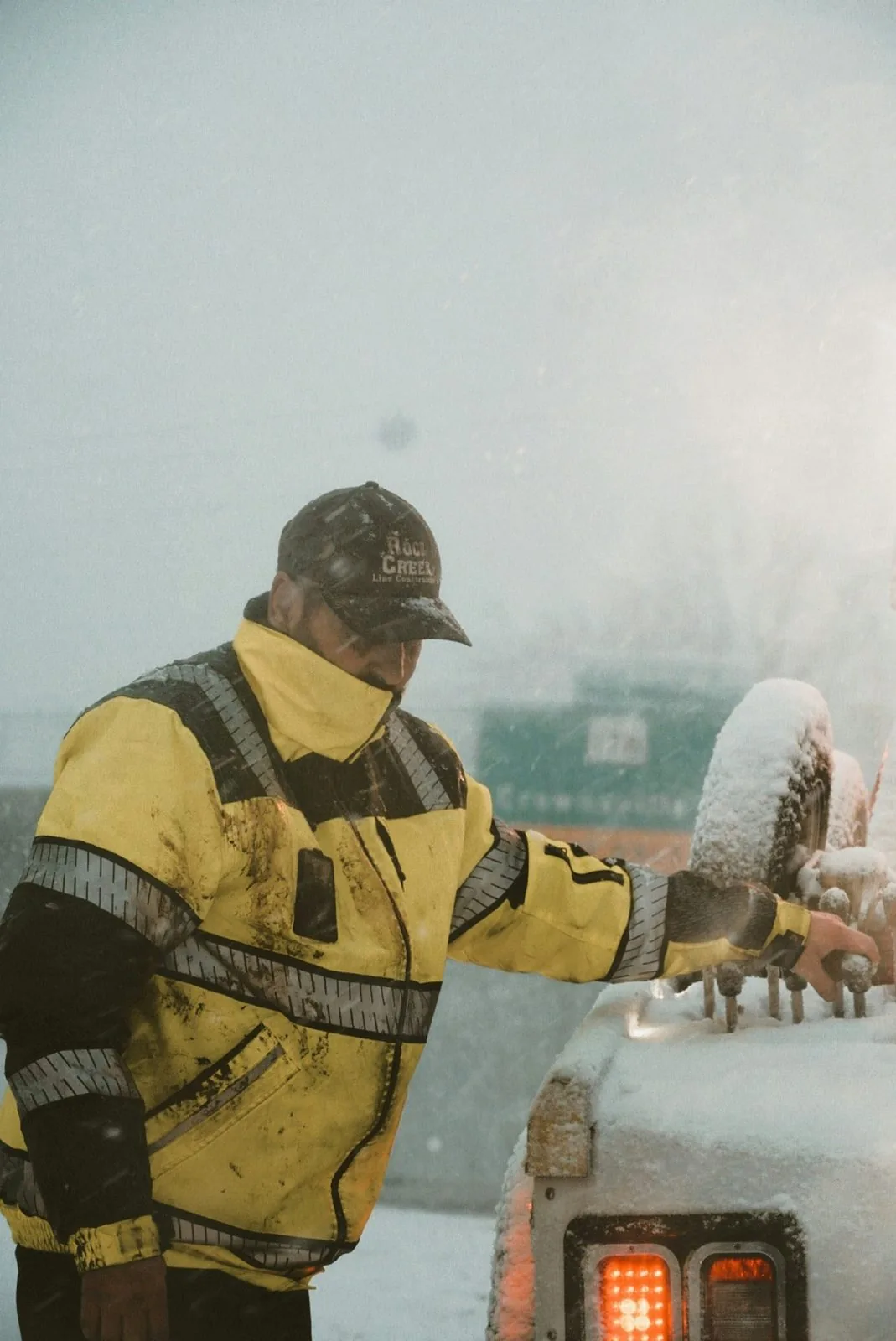
What to check when you spec it: taped seams (not just a coated fabric), storm flaps on zips, and — critically — a factory that actually verifies the waterproofing on an ISO 811 hydrostatic head tester with written records per batch. A "waterproof" hi-vis jacket that leaks through needle holes is the most common complaint we hear from buyers switching suppliers.
Trend 2: Segmented and Printed Reflective Tape
Traditional continuous tape is being challenged by segmented tape — the reflective material cut into patterns with breathable gaps. It stretches better, bends quietly around elbows and shoulders, vents body heat through the gaps, and gives the garment a cleaner technical look. 3M's segmented Scotchlite products lead this space, and the certification path is the same as continuous tape: full RA-value documentation per lot.
Printed-look transfers are also moving from fashion into workwear — used on hems and panels where full retroreflective performance is not required. Used well (and within EN ISO 20471's placement rules), they let designers build brand identity without sacrificing certified visibility.
Trend 3: Sustainability Reaches Hi-Vis
Recycled content has crossed from outdoor apparel into workwear. For 2026 programs we are quoting:
- GRS-certified recycled polyester for shell fabrics and linings, with transaction certificates per lot
- Recycled insulation in padded hi-vis parkas
- OEKO-TEX Standard 100 as the hygiene baseline buyers increasingly write into purchase orders
- Longer-lasting garments as the quiet sustainability play — a jacket worn three seasons beats two jackets worn one-and-a-half
One honest caveat from the factory floor: fluorescent background material must still pass EN ISO 20471 chromaticity requirements, and recycled bases behave slightly differently in dyeing. Lot-level testing matters even more with recycled inputs — make sure your supplier shows you the reports, not just the certificate logo.
Trend 4: Modern Fits — Visibility Without the Box
Certified visibility used to mean shapeless. 2026 tech packs ask for articulated elbows, shaped backs, adjustable hems and women's fits — the same block-and-drape thinking as technical outdoor apparel. This is not cosmetic: a jacket that fits moves with the wearer, so tape bands stay correctly positioned instead of riding up — and crews actually wear their PPE instead of "losing" it.
For buyers this means one extra step in development: a full size-set fitting on real body types before bulk, which is exactly how our pattern room develops hi-vis and workwear programs — the same fitting discipline we apply to outdoor shells.
Spec 2026 hi-vis as a system: one waterproof breathable shell (taped, WP-tested), segmented certified tape, GRS fabric options where the customer's sustainability story needs them, and a real fit session before bulk. Ask for lot-level docs at order confirmation — not after shipment.
How to Build This Into Your Next Program
All four trends cost more per unit than a commodity hi-vis jacket — but they are what differentiate a program that wins tenders at a healthy margin. We build these programs from 400 pcs per color with 7–10 day counter-sampling, in a BSCI audited factory with AQL 2.5 final inspection.
Planning a 2026/27 hi-vis program? Send your tech pack or a reference sample — we will quote the fabric, tape and construction options with certification documentation included.
The compliance boundary behind each trend
Every trend in this list has a point where it stops being a design choice and starts being a certification problem. Knowing where that line sits is what separates a program that ships from one that fails at final inspection.
- Segmented tape. The standard cares about total retroreflective area and measured performance, not whether the band is continuous. But the area calculation has to account for the gaps between segments, and that calculation belongs in the tech pack, not in a supplier’s assumption.
- Recycled fabric. EN ISO 20471 sets no requirement on fibre origin. It does set chromaticity and luminance limits, and recycled polyester can drift toward green if the fluorescent dye is not matched to the substrate. Test the actual fabric you will produce in.
- Modern fit. A slimmer pattern removes fluorescent background area. This is the single most common reason a redesign loses its certification, and the failure is discovered after the sample is already approved on looks.
- Waterproof breathable. Adding a membrane and taped seams means the garment now has to satisfy EN 343 as well, which tests the finished garment rather than the fabric. That is a separate test budget and a separate timeline.
None of these are reasons to avoid the trend. All of them are reasons to run the compliance check at design stage rather than at final inspection.
Frequently asked questions
Does segmented reflective tape still meet EN ISO 20471?
It can. What matters is the total retroreflective area and the measured coefficient of retroreflection, not whether the band is continuous. Segmented tape must be tested and certified as part of the garment, and the area calculation has to account for the gaps.
Can recycled fabric be certified to EN ISO 20471?
Yes. The standard sets requirements for colour, luminance and retroreflective performance, not for fibre origin. Recycled polyester can meet the chromaticity and luminance requirements provided the fluorescent dye is applied correctly and tested on the actual substrate.
Does a modern fit reduce the compliant area?
It can, and this is the most common way a redesign fails certification. A slimmer pattern reduces the fluorescent background area, so the area calculation must be redone on the new pattern rather than carried over from the previous block.
Is waterproof breathable hi-vis worth the extra cost?
It depends on exposure. A waterproof breathable membrane with taped seams adds real cost over a standard polyester shell. The question is whether the wearer works in rain often enough to justify it, which is a use-case decision rather than a budget one.